Why Most Global Policies Fail in Practice – Michael Brown’s Unfiltered Perspective
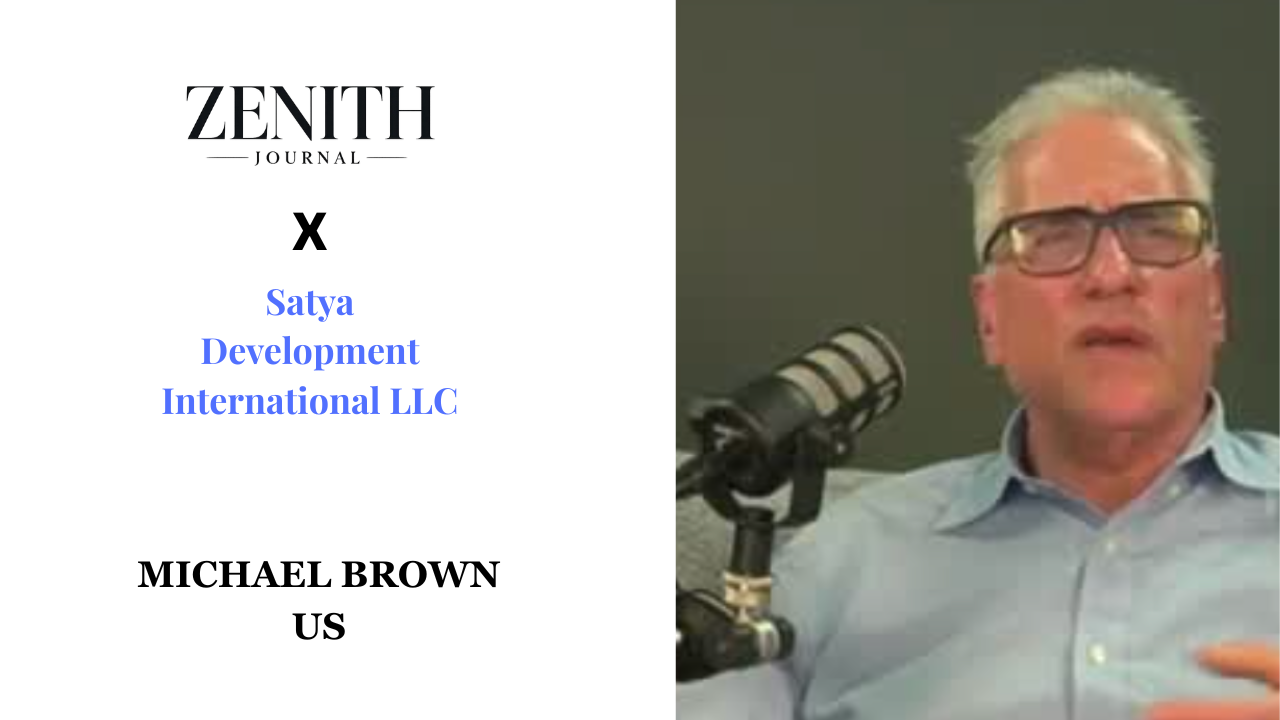
Michael Brown has spent over four decades working across some of the most complex and unpredictable regions in the world. From governance and climate policy to natural resource management and anti-corruption, his work has consistently focused on one question – what actually works when theory meets reality?
In global policy circles, solutions are often designed at a distance – shaped by models, frameworks, and assumptions that appear sound on paper. But in practice, many of these systems struggle to deliver meaningful results. For Michael, this disconnect is not surprising. It is structural.
Having worked across more than 35 countries in Africa, Asia, Latin America, and beyond, he has seen how policies behave under pressure. Not in controlled environments, but in places where governance is fragile, incentives are misaligned, and real-world complexity cannot be simplified.
“Not failure. Feedback from reality.”
The Gap Between Design and Reality
One of the most consistent patterns in development and policy work is the gap between intention and execution. Policies are often designed with clarity, ambition, and technical precision. But they fail to account for local dynamics, cultural context, and the everyday decisions made by people on the ground.
This is where friction begins. Not immediately visible, but gradually impactful. Incentives do not align. Systems are not adopted. Outcomes drift away from expectations. Over time, what looked like a strong solution becomes difficult to sustain.
Michael’s work has consistently focused on closing that gap – not by simplifying problems, but by grounding solutions in reality. This includes prioritizing feasibility, local ownership, and the ability to adapt to changing conditions rather than enforcing rigid structures.
A Career Built on Field-Based Insight
Throughout his career, Michael has led and contributed to large-scale initiatives involving environmental governance, climate mitigation, conservation, and development strategy. His work has intersected with major global institutions, including USAID-linked programs and international policy frameworks.
He also founded Innovative Resources Management, a nonprofit that focused on designing and implementing development solutions across the Congo Basin. The organization’s approach reflected his core philosophy – systems should be built around people, not imposed upon them.
This principle may sound straightforward, but in practice it requires a shift in how success is defined. It moves away from top-down control and toward collaborative, adaptive systems that reflect the realities of those involved.
Rethinking Expertise in a Changing World
Today, Michael is applying this same mindset to a new domain – digital media. Through his podcast The Unpopular View, he explores geopolitics, public policy, and global governance using a perspective shaped by decades of field experience.
This transition is not without its challenges. The digital landscape operates differently. It rewards clarity, speed, and engagement. It requires distilling complex ideas into formats that can hold attention while still preserving depth.
For Michael, this is not a limitation, but an extension of learning. It reflects a willingness to evolve and adapt, even after decades of established expertise.
Why Independent Thinking Matters
In an era where public discourse is increasingly shaped by simplified narratives and polarized viewpoints, independent thinking becomes more valuable. Michael’s work stands out because it resists easy categorization.
Rather than aligning with dominant narratives, his approach is rooted in analysis, context, and evidence. It reflects a deeper engagement with complexity – one that does not seek to reduce it, but to understand it more clearly.
This perspective is especially relevant in areas such as geopolitics and climate policy, where decisions carry long-term consequences and require more than surface-level interpretation.
Advice Grounded in Experience
For those starting their careers, Michael’s advice is simple but practical – engage with the world directly. Travel, observe, and experience different environments. Take risks, but approach them intelligently.
Understanding does not come from distance. It comes from participation. And in a world that is both challenging and full of opportunity, the ability to navigate complexity is one of the most valuable skills to develop.
Final Perspective
Michael Brown’s work is not about offering easy answers. It is about asking better questions. Questions that challenge assumptions, expose gaps, and bring attention back to what actually works.
In doing so, he represents a perspective that is increasingly rare – one grounded in experience, shaped by reality, and willing to remain independent in how it sees the world.