Why Leadership Fails Without Culture
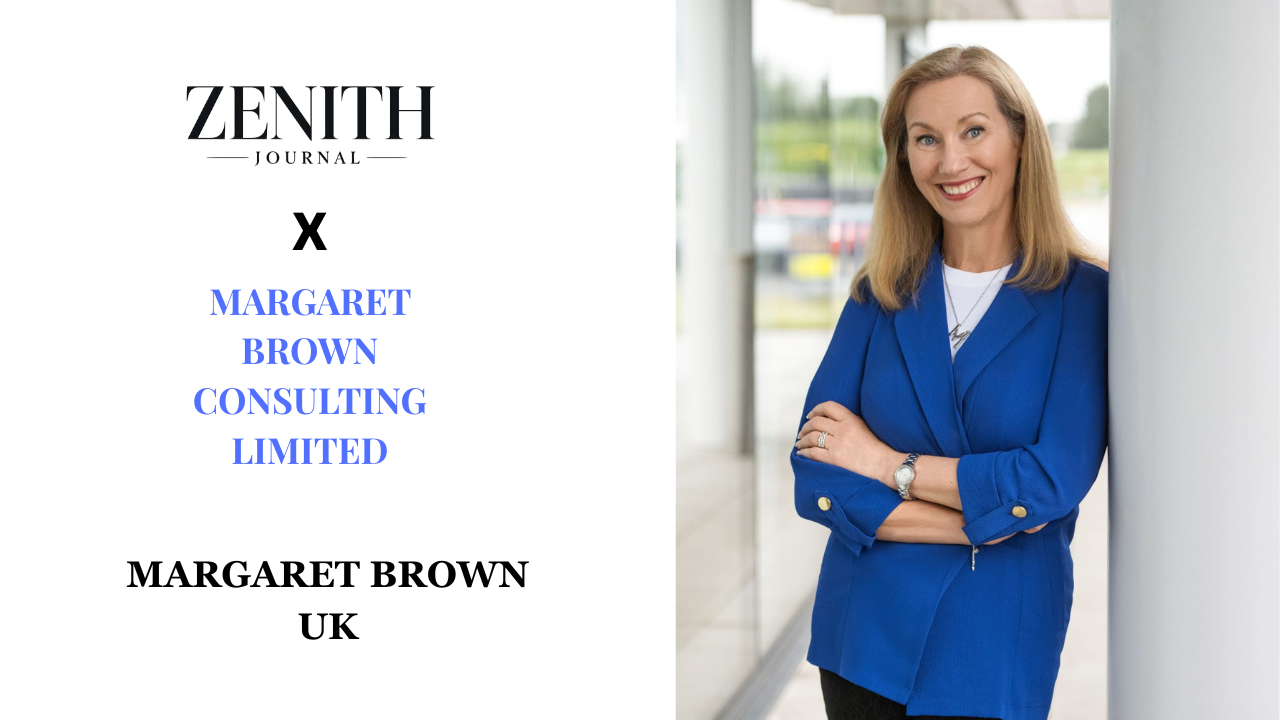
Margaret Brown is an award-winning certified executive coach, best-selling author, and leadership development specialist whose work spans transformational leadership, organisational development, employee engagement, and service excellence. Her book Culture Pays captures the central idea behind her practice: culture is not a side effect of leadership. It is one of its most important outputs.
For nearly 35 years, Margaret has worked across sectors and continents, helping organisations strengthen the conditions that allow people to perform well and stay engaged. Her experience is broad, but her perspective is precise. Leadership, in her view, is not about image or volume. It is about creating the working environment in which trust, accountability, and performance can actually take root.
That perspective matters because many organisations still treat culture as a soft concept. Margaret does not. She treats it as a business system. When leadership is strong, people understand direction, feel respected, and contribute more consistently. When leadership is weak, the damage is rarely immediate, but it is always visible in lower retention, reduced energy, and a culture that never fully stabilises.
Leadership That Improves Working Lives
What drives Margaret most is helping make a positive difference to the working lives and wellbeing of people through transformational leadership. That is not a vague aspiration. It is the basis of her consulting work, coaching practice, and public thinking on culture and employee engagement.
Her approach is practical and collaborative. She works with organisations to understand their culture, their people, and their business objectives, then helps leaders build environments where people are trusted, developed, and involved in the organisation’s purpose and direction. In her model, the best workplaces are not simply efficient. They are places where people can do meaningful work without losing themselves in the process.
“Leadership is not transactional. It shapes the emotional and operational climate people work in every day.”
Why Culture Pays in Real Terms
Margaret’s book, Culture Pays, is built around a clear argument: a people-focused culture creates commercial value. Her work connects leadership behaviour with measurable outcomes such as loyalty, productivity, engagement, retention, and bottom-line business performance.
The logic is straightforward. People perform better when they feel trusted and included. Teams become more resilient when they are developed rather than merely managed. And organisations become more stable when leadership is consistent enough to build confidence across the business.
This is where her work stands out. She does not present culture as an abstract value statement. She frames it as an operating advantage. That is one reason her message resonates with senior leaders, founders, and people professionals looking for something more practical than generic leadership advice.
A Career Shaped by Challenge and Observation
One of the most formative experiences in Margaret’s journey came early, when she was on the receiving end of poor and toxic leadership. The effect was profound. It affected productivity and mental health, and it left a lasting lesson about how leadership behaviour can either strengthen or diminish the people around it.
Rather than treating that experience as an isolated disappointment, she used it to sharpen her understanding of what effective leadership actually requires. That includes self-awareness, empathy, consistency, and the willingness to build trust in a way that people can feel, not just hear about in meetings.
This long view is also visible in the scope of her career. She has worked extensively in the oil and gas sector and now increasingly in energy transition, delivering 360-degree executive feedback coaching, bespoke leadership programmes, large employee conferences, and performance coaching at all levels.
“Poor leadership does not just affect output. It changes how people experience work.”
What Her Results Reveal About Leadership
Margaret’s work is not only philosophical. It is results-driven. One of the clearest examples is her role in helping reduce employee turnover at a medium-sized oil and gas company from over 12 percent to less than 1 percent.
That kind of outcome matters because attrition is rarely just a resourcing issue. It is often a culture issue, a leadership issue, or both. When turnover drops that sharply, it usually indicates that the organisation has changed not only what it does, but how people feel inside the business.
- Reduced turnover from over 12% to less than 1%
- Strengthened leadership alignment
- Improved employee engagement and trust
- Built a stronger retention environment
Her work shows that culture is not a slogan to be displayed. It is a discipline to be built.
Staying Ahead by Listening Better
Margaret stays ahead in her field by doing something deceptively simple: she listens closely to clients, empathises with their concerns, and works collaboratively to address current challenges. That approach keeps her work grounded in reality rather than theory.
It also explains why her advisory style feels practical. She is not trying to impose a fixed model on every organisation. She is trying to understand how each culture works, where the friction sits, and what leadership needs to change for performance to improve in a sustainable way.
She also brings a creative dimension to her leadership work. In 2021, she graduated from Gray’s School of Art in Aberdeen with a BA Honours in painting while continuing to manage key client relationships throughout her degree and the Covid period. That combination of creative and strategic thinking gives her a distinctive lens on problem-solving, workshops, and team development.
Advice for Young Professionals
Margaret’s advice is direct and unusually grounded. She encourages younger professionals to continue developing both personally and professionally, while paying close attention to their health and sustainability.
Good food, regular exercise, quality sleep, and time in nature without screens are not treated as lifestyle extras. They are part of the foundation that allows people to work well, think clearly, and stay resilient over time.
That advice reflects the larger logic of her career. Sustainable performance is not created by pressure alone. It is created by people who are healthy, supported, and led in a way that respects both output and wellbeing.
Final Thought
Margaret Brown’s work sits at an important intersection: leadership, culture, employee engagement, and business performance. Her message is not complicated, but it is consequential. Organisations do better when people are trusted, developed, and aligned with purpose.
That is the real argument behind Culture Pays. Culture is not a secondary concern. It is a strategic asset. When leaders understand that, they stop treating people as an afterthought and start building organisations where performance has a stronger place to grow.
Margaret Brown