
Why Most Systems Fail People
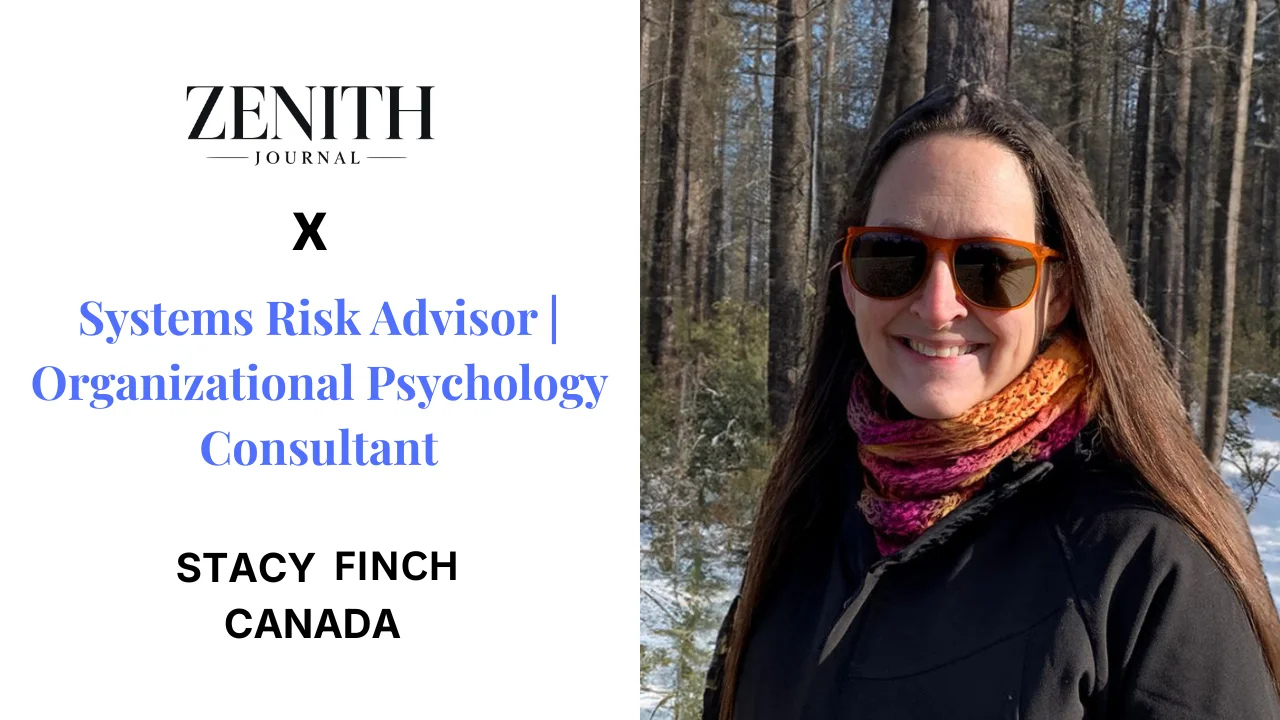
Stacy Finch is challenging one of the most dangerous assumptions in modern work – that people are the problem, when in reality, the system is.
The Wrong Question
Most organizations ask the same question when performance drops.
“What’s wrong with the people?”
It feels logical.
It feels efficient.
It feels like the fastest path to a solution.
But it is often the wrong question.
Because what looks like an individual failure is frequently a systemic one.
Misaligned workflows.
Unclear expectations.
Structures that create friction instead of flow.
These are not people problems.
They are design problems.
From a psychological perspective, this misdiagnosis has consequences. When systems consistently fail to support clarity and autonomy, individuals begin to internalize the dysfunction. Stress increases, cognitive load rises, and performance declines not because of lack of capability, but because the environment is working against them. Over time, this leads to burnout, disengagement, and a breakdown in trust between individuals and the systems they operate within.
Where Systems Break
Stacy Finch has spent years working inside and alongside organizations where performance struggles were treated at the surface.
Coaching individuals.
Adding more meetings.
Increasing pressure.
But none of these address the root cause.
Her work focuses on identifying the patterns that sit beneath the surface.
The hidden misalignments.
The inefficiencies that slowly compound.
The systems that demand more from people, instead of supporting them.
“Burnout is rarely a sign of weak people. It is often a signal of broken systems.”
A Different Approach
What makes Stacy’s work different is not just her background in psychology.
It is how she applies it.
Instead of focusing on individuals, she looks at systems.
Instead of asking people to adapt, she redesigns the environment they operate in.
That might mean:
Reworking workflows so they create clarity instead of confusion
Restructuring communication so it supports alignment instead of noise
Designing systems that naturally reduce friction instead of amplifying it
The goal is not to push people harder.
It is to build systems that allow them to perform better.
The Shift That Changes Everything
The moment organizations stop blaming people and start examining systems, everything changes.
Conversations become more honest.
Solutions become more effective.
Performance becomes sustainable.
Because when systems are designed well, people do not need to compensate for them.
They can simply do their work.
“The strongest organizations are not the ones that demand more from people – but the ones designed to support them better.”
More Than a Fix
Stacy Finch’s work is not about quick solutions.
It is about long-term alignment.
At a time when organizations are struggling with burnout, disengagement, and inefficiency, her approach offers something rare.
Clarity.
Not just in what needs to change.
But in how systems need to be built moving forward.
Because in the end, the most impactful work is not fixing people.
It is designing systems where people do not need fixing.